 QaranJobs.com – somali jobs – somalijobs – qaranjobs – Qaran Jobs Somali Jobs

NAGAAD Network
Terms Of Reference for Challenging Harmful Attitudes Norms Gender Equality and Women Empowerment in Somalia/ Somaliland
Job Description
TERMS OF REFERENCE (TOR)
Project title: Challenging Harmful Attitudes Norms Gender Equality and Women Empowerment in Somalia/ Somaliland (CHANGES-2.0)
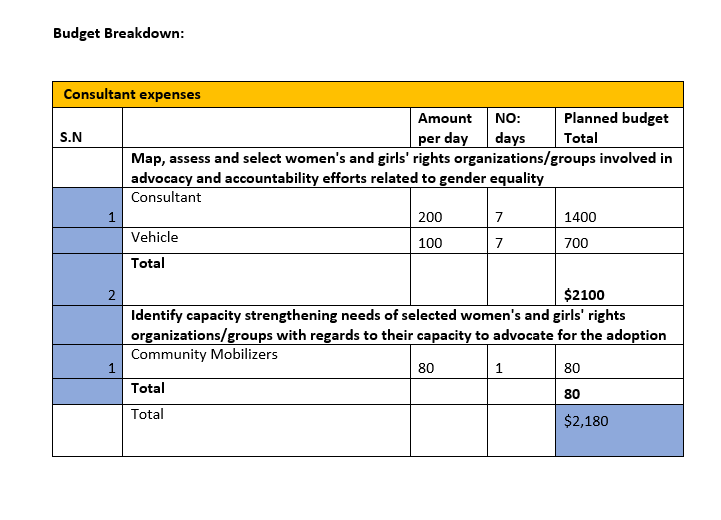
Activity: 1311.1: Map, assess and select women’s and girls’ rights organizations/groups involved in advocacy and accountability efforts related to gender equality.
Activity: 1311.2 Identify capacity strengthening needs of selected women’s and girls’ rights organizations/groups with regards to their capacity to advocate for the adoption.
Background
Decades of conflict, compounded with recurring climate crisis, have initiated significant shifts in gender roles and dynamics related to household economy; due to an increase in extended absence of males due to economic migration, pastoral lifestyle and loss of life due to conflict. 14% of households are headed by women in urban areas and 12% in rural areas. As a result, Somali women are becoming increasingly active in non-traditional economic activities and are estimated to be the main breadwinner in 70% of families and make up approximately 60% of business owners, predominantly informal microenterprises. Yet, economic decision making continues to sit primarily within the patriarchal structure and whilst women may manager smaller funds relating to household expenses, men remain the primary financial decision maker.
Women’s economic empowerment plays a significant role in uplifting the status of women and in enabling them to play a strong role in decision making processes both within their households and communities. The emergence of women as income earners also impacts the concept of traditional male identity which can be a significant source of stress to men who “fail” to fulfill their perceived role as provider and protector. This has been noted, globally and in Somalia, to lead to increased violence against women. CHANGES phase 1 established and supported businesses in form of VSLA groups which enabled women to contribute to their household incomes, enjoy some level of economic and social security and participate meaningfully in discussion forums and dialogues aimed at enlightening couples with non-violent ways of resolving domestic disputes. Findings indicated that despite household income improving by 10%, very few women have so far gained status as a financial decision maker, highlighting that bringing an income and improving the household quality of life is not the only component which influences gender norms. Economic empowerment will be coupled with work at the household level to sensitize partners and on GE to support behavior change.
To tackle these problems, IRC in partnership with Save the Children (SC) and CARE is implementing a four-year program to strengthen gender equality and empowerment of women and girls in Somalia. The project has 4 ultimate outcome which will be achieved across the project life span.
The expected outcome of the project is:
- Decreased discriminatory social norms and practices that perpetuate and validate sexual and gender-based violence (SGBV) against women and girls- both very young adolescents aged 10-14 (VYA) and older adolescents aged 15-19 (OA), including female genital mutilation/cutting (FGM/C) and child, early and forced marriage (CEFM).
- Increased voice and agency of VYA and OA girls and economic empowerment of women in Somalia to make and act on life decisions for themselves, including with regards to sexual reproductive health and rights (SRHR) and GBV.
- Enhanced enabling environment (media, policy, and civic engagement) that supports gender equality (GE) and women and girls’ rights.
- Enhanced social and economic empowerment of women to have greater household and community involvement and voice in decision making
Background women right organization
The capacity assessment exercise should be participatory and consultative. The consultant should conduct the Map, assess, and select women’s and girls’ rights organizations/groups involved in advocacy and accountability efforts related to gender equality. After the mapping the consultant will identify capacity strengthening needs of selected women’s and girls’ rights organizations/groups with regards to their capacity to advocate for the adoption. It is expected that the assessment will be built around self-assessment processes as well as broad consultation to women right organization,
The capacity assessment framework should recognize the multiple dimensions of capacity in relation to each other as well as to the expected results. This approach ensures that capacity building should go beyond individual capacity (relevant skills and abilities) to include organizational capacity (when it comes to the advocacy and lobbying.) as well as the broader context and environment within which the organization functions.
The advocacy capacity assessment is intended to measure an organizations’ overall advocacy capacity. The key focus areas of the assessment will be:
- Advocacy Strategy Development and Implementation
- Gathering and Use of Evidence
- Networking and Negotiation with Decision-Makers
- Advocacy Communications and Outreach
- Partnering and Coalition-Building
- Community Mobilization and Empowerment
Expected Outcomes:
- Map, assess and select women’s and girls’ rights organizations/groups involved in advocacy and accountability efforts related to gender equality.
- Identify strengthening needs of selected women’s and girls’ rights organizations/groups with regards to their capacity to advocate for the adoption
- capacity Advocacy Capacity Assessment based on the context and the status of the Women right organization
- An overview of current advocacy strengths, weaknesses, and bottlenecks within the specific organization.
- Produce and share the final reports for the assessment.
Target group
Women’s and girls’ rights organizations
Geographical Area:
- Hargeisa/Burco
Roles and Responsibilities
Consultant: The consultant will be responsible for designing and delivering the mapping and identify capacity strengthening needs for women right organization.
NAGAAD: The Consultant will be contracted by NAGAAD. NAGAAD to will review the report and monitor the work of the consultant,
Duration and Timeframe
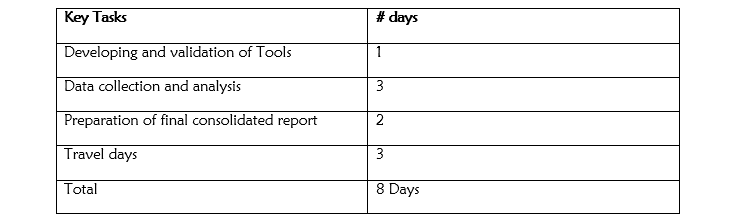
The duration and timeframe for the assignment will depend on the organization, but will generally align to the key milestones in the table below:
Skills and Qualifications
- BS Degree in Gender Studies with at least 4 years of experience in gender and socio-economic analysis and training
- The candidate should have sound experience in
- gender equality training, should be able to lead dynamic gender training sessions, and to develop appropriate strategies to deliver the required training.
- The candidate should have proven experience in developing strategies for effective gender mainstreaming.
- Fluency in English and Somali is essential
- Previous work experience in and knowledge of socio-economic related to INGOs is desirable
How to apply
The consultant Deadline will be: July 17th 2022
Email : nagaad.org2017@gmail.com

………………………………………………………………………………………
QaranJobs.com
………………………………………………………………………………………
PLEASE JOIN US – QARAN JOBS
Follow us on our Social Media:
Telegram: https://t.me/qaran_jobs
Facebook Page: https://www.facebook.com/QaranJobs.so
Facebook Group: https://www.facebook.com/groups/somaliajobs
Linkedin: https://so.linkedin.com/company/qaranjobs
Twitter: https://twitter.com/QaranJobs
Instagram: https://www.instagram.com/qaranjobs
Application: https://play.google.com/store/apps/details?id=com.qaran.jobs
………………………………………………………………………………………
To apply for this job email your details to nagaad.org2017@gmail.com